Everyone in the family gives different instructions. Your helper has no idea whose version to follow.
You all committed to living under one roof. But you never aligned on how the home actually runs — and your helper absorbs the cost.
Kinly gives the household one shared reference so your helper stops navigating three sets of conflicting expectations every day.

Three people. Three sets of rules. Your helper follows whichever one came last.
Everyone lives here. Everyone gives instructions. Nobody agreed on which ones count.
Kinly puts cleaning routines, kitchen preferences, shopping notes, and house rules in one place the family agrees on. Your helper checks one reference — not three people who each think they are right.
Private by default. No ads. No surveillance.


Does this sound like your home?
Mum says one thing. Grandma says another. My helper does not know whose instructions to follow.
We all have different standards — but we never sat down and agreed on one.
She is not doing it wrong. We are just telling her three different versions of right.
What Kinly is

Kinly is a shared living app for people who live together. In multi-generational Singapore homes with a helper, it replaces conflicting verbal instructions with one visible, agreed baseline — so your helper has a single version of the truth.
How Kinly helps in practice
Once the family agrees on one baseline, Kinly adds simple tools that keep everyone aligned — so your helper stops paying the price for contradictions that are not hers.
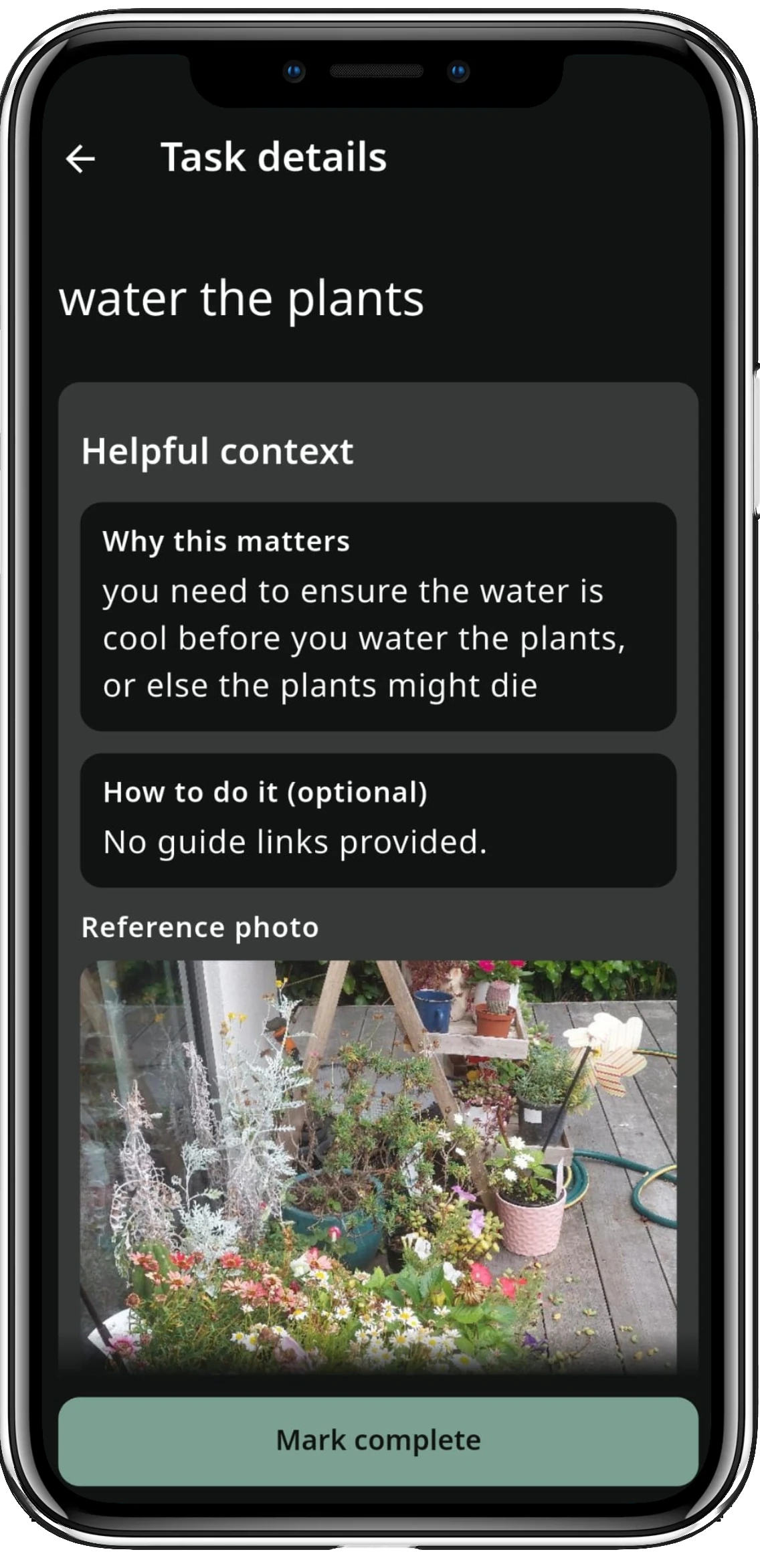
Household routines are agreed once by the family — so your helper follows one set of expectations, not whichever came last.

Shopping and kitchen expectations are negotiated, not contradicted — so your helper stops getting caught between competing preferences.
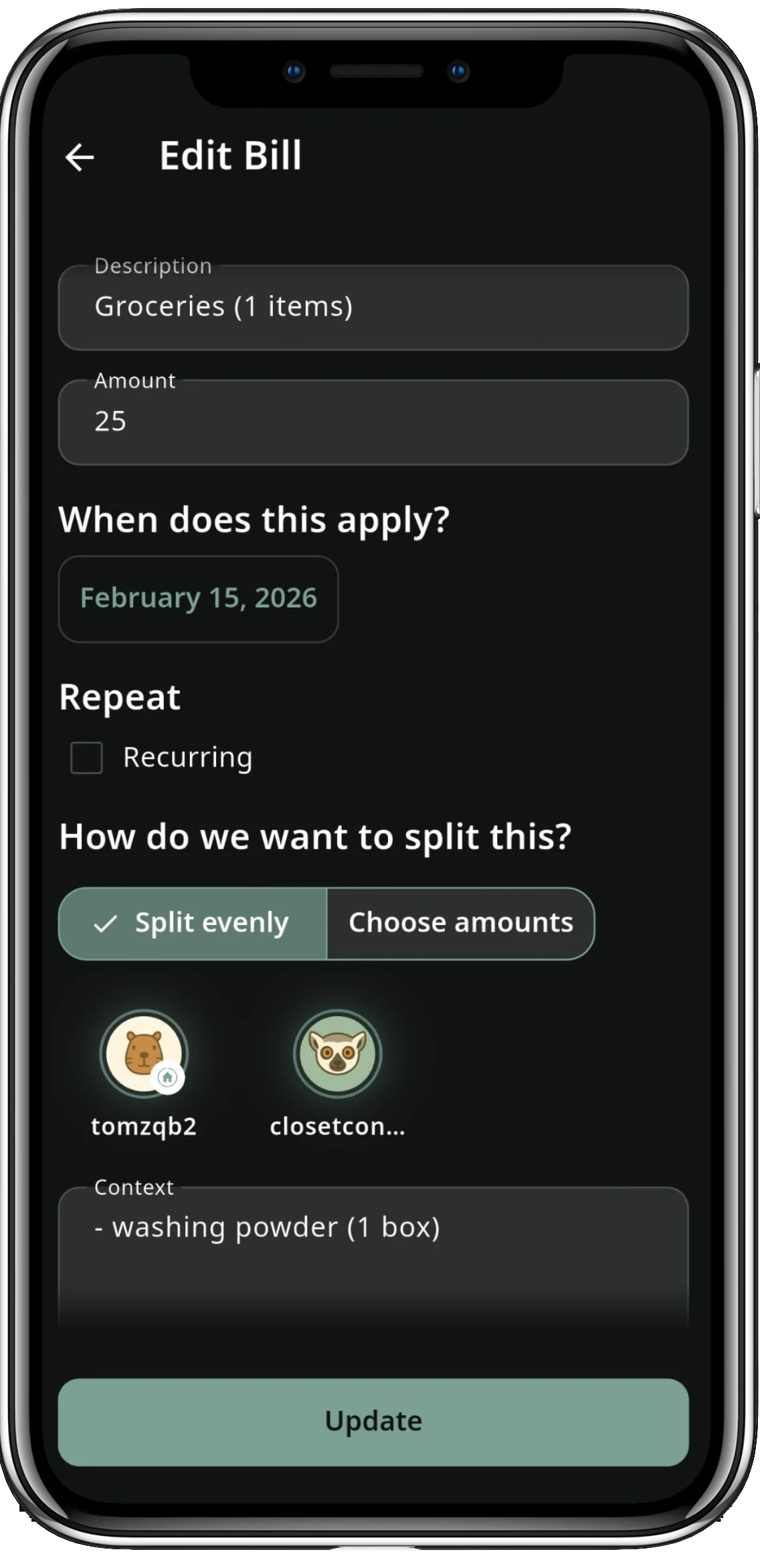
Household purchases have one agreed context — so nobody blames the helper for following someone else's instruction.

Surface family misalignments before your helper has to choose sides again.
Kinly role: one shared baseline
Forces the family to agree on one baseline — so the contradictions stop before they reach your helper.
Your helper follows one shared reference instead of navigating conflicting instructions from every family member.
When the household shifts
Family dynamics shift — someone travels, grandparents visit, priorities change. The agreed baseline adapts without creating new contradictions.
Weekly check-ins surface where the family has drifted apart — so your helper does not have to absorb the misalignment.
Who this is for
Multi-generational Singapore households where multiple family members give conflicting instructions to a helper.
Homes where the helper absorbs the cost of a family that never aligned on how things should run.
Kinly is not...
Not surveillance.
Not employee monitoring software.
Not a punishment system.
Not a scorecard for the helper — the alignment problem belongs to the family.